
Reviewed · HO CHI MINH CITY
Using Medium Format film camera to discover Saigon
Saigon looks different through a twin-lens reflex camera. This private walk gives you one roll of black-and-white film, so every frame matters. Instead of racing from landmark to landmark, you spend time with coffee culture, alley markets, an old apartment building, and the everyday life of Ho Chi Minh City.
I like the thoughtful pace and the chance to use a real medium-format camera, not a phone with a vintage filter. I also like Bui Hoang Tu’s role as a local guide and translator, which can make small conversations easier and less awkward.
The main drawback is the fixed amount of film. You get one roll, not unlimited shots, and the tour does not include private transportation. The experience is best for people who enjoy slowing down, walking, and accepting a little uncertainty.
Five things to know before you book
- One roll changes how you see Saigon: With limited exposures, you must choose carefully rather than photograph everything.
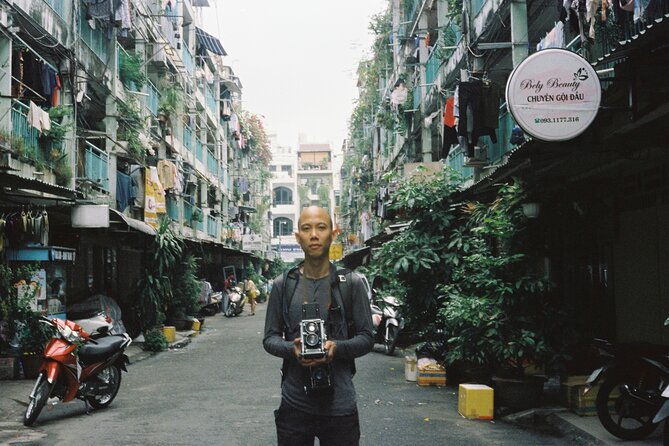
- A vintage TLR camera is part of the experience: You receive a camera, a short lesson, and time to practice before the walk continues.
- Coffee comes first: The route includes a 90-year-old coffee shop where you can sit and drink coffee like a local.
- The route favors ordinary places: Alley markets, an old apartment building from 1968, and local streets replace the usual postcard stops.
- Bui Hoang Tu helps with local contact: The guide acts as translator and helps you break the ice with people along the way.
Why a film camera changes a Saigon walk
Most city photo walks give you a guide, a route, and plenty of chances to snap away. This one adds a useful restriction: one roll of black-and-white medium-format film.
That limit is not just a technical detail. It changes your habits. With a digital camera, you can take twenty versions of the same doorway, cup of coffee, or passing face. With a roll of film, you pause. You look at the light. You decide if the scene is worth one of your frames.
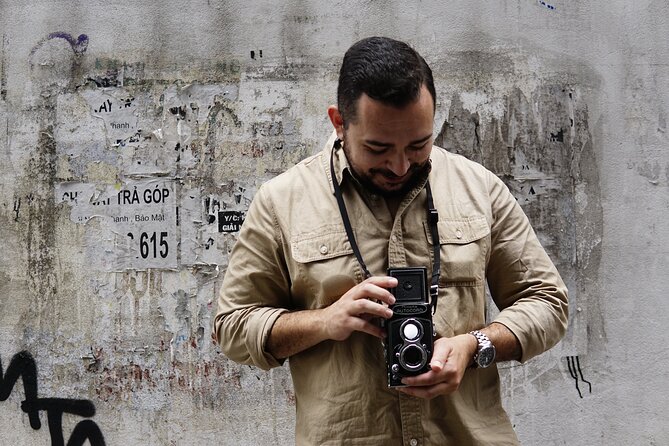
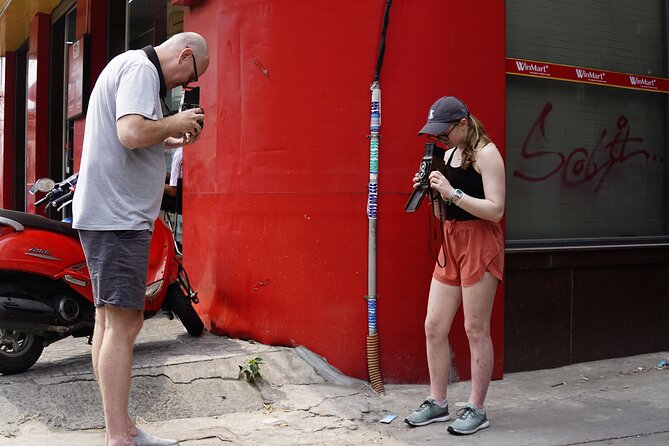
The camera is a TLR, or twin-lens reflex camera. Its design is old-fashioned and simple. You look down into the viewing screen rather than holding the camera directly to your eye in the usual way. The setup feels slower and more deliberate, which suits the aim of the walk.
A short briefing comes at the beginning. You learn the basic controls and practice before moving through the city. The experience is not only about taking home photographs. It is also about learning how older cameras work and understanding why analog photography demands patience.
One important point: the film is black and white. You should not expect bright color studies of Saigon’s signs, coffee drinks, or street stalls. Instead, you will be looking for shape, shadow, texture, contrast, and expression. That can make old buildings and narrow lanes especially rewarding subjects.
Other Ho Chi Minh City trips people line up in the same week:
- Cu Chi Tunnels Tour from HCM City – Morning or Afternoon
★ 5.0 · 15,833 reviews - From HCM City: Mekong Delta Tour with Sampan Journey
★ 4.5 · 13,132 reviews - Ho Chi Minh City Street Food Tour & Sightseeing By Motorbike
★ 5.0 · 9,413 reviews
Starting at 73/8 Hồ Hảo Hớn
The experience begins at 73/8 Hồ Hảo Hớn in District 1. This is a meeting point rather than a major sightseeing landmark, so check the address carefully before setting out.
You begin by picking up the analog camera and one roll of film. Bui Hoang Tu gives you a short introduction, then talks with you about Saigon and the plan for the walk. This early conversation matters because the activity depends on a relaxed connection between guide and participant.
You do not need to arrive as an experienced photographer. The purpose of the opening lesson is to help you handle the camera and begin making photographs. Still, you will get more from the outing if you are willing to learn a few basic controls and accept that film photography has a learning curve.
The experience is private, so only your group takes part. That makes the camera instruction easier to adapt to your pace. It also gives you more room to ask questions or spend extra time on a scene that catches your attention.
The advertised duration is about three to four hours. That is enough time for a proper introduction, a coffee stop, photography practice, and a walk through local streets without turning the outing into an exhausting full-day program.
Coffee at a 90-year-old shop
The first major stop is a coffee shop described as one of the oldest in town, with about 90 years of history. Coffee is not treated as a quick drink before the real activity begins. It is one of the central parts of the experience.
You sit down and drink coffee in a local setting. That pause gives you time to settle into the slower rhythm of the tour and talk with Bui Hoang Tu about Saigon. Coffee and tea are included, which keeps this part simple.
For photography, the coffee shop offers a natural first subject. You can get used to the camera while looking at cups, tables, shadows, old surfaces, or the movement around you. Since the film is black and white, details and lighting matter more than color.
The stop also helps explain why this is not a standard city sightseeing route. You are not simply being taken to a famous building, told its date, and moved along. You are given time to sit in a place tied to daily life and use it as a way into the city.
The available details do not specify the exact coffee drink or the full menu. If you have a particular preference, ask Bui Hoang Tu at the start. The inclusion covers coffee or tea, but it does not promise a meal.
Learning the camera in alley markets
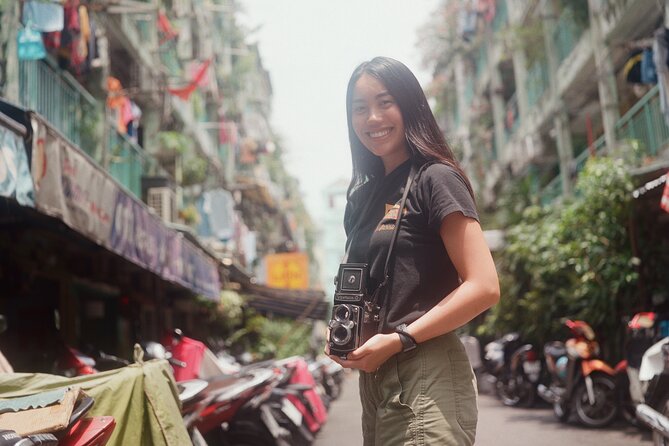
After the coffee stop, the route moves through nearby alley streets and local markets. This is where the camera lesson becomes practical.
A TLR camera can feel unusual if you normally use a phone or a modern digital camera. You may need a little time to frame subjects through the viewing screen and wind the film correctly. The outing gives you a chance to practice while moving through real streets rather than studying controls in a classroom.
Alley markets work well for this kind of photography because they offer many small scenes instead of one grand view. You might find useful subjects in produce, shop fronts, signs, baskets, hands, doorways, or the changing pattern of people moving through a narrow lane. That wording is deliberately cautious, since the precise market scenes will depend on the day and the route.
The film limit asks you to edit as you go. You cannot simply photograph every stall. Ask yourself what makes one scene stronger than the next. Is it the light? The shape of a doorway? A person’s gesture? A strong contrast between an old wall and a bright shirt?
Bui Hoang Tu also helps you connect with local people. His translation support can make a difference when you want to ask permission, exchange a few words, or understand what is happening around you. You should still be respectful. A guide can open a conversation, but you remain responsible for how you photograph people.
A completely different sort of day out of Ho Chi Minh City:
- HCM: Cu Chi Tunnels-Tapioca Small Group Tour Morning or Afternoon
★ 5.0 · 7,485 reviews - Cu Chi Tunnels and Mekong Delta Signature Tour
★ 5.0 · 7,328 reviews - Mekong Delta Guided Tour from Ho Chi Minh City
★ 4.5 · 7,192 reviews - Cu Chi Tunnels & Mekong Delta Tour with VIP Limousine Transfer
★ 5.0 · 7,052 reviews
Inside a 1968 apartment building
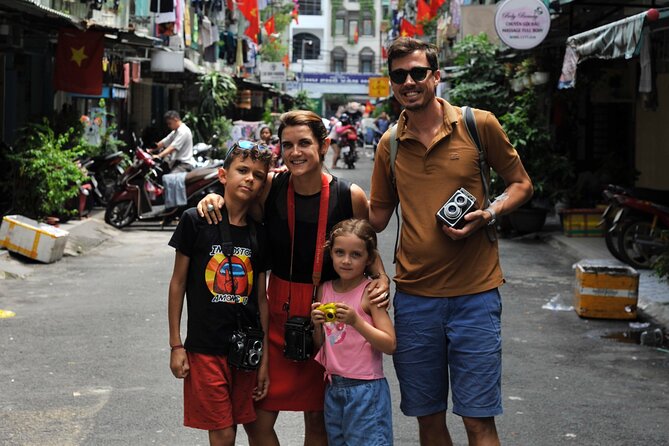
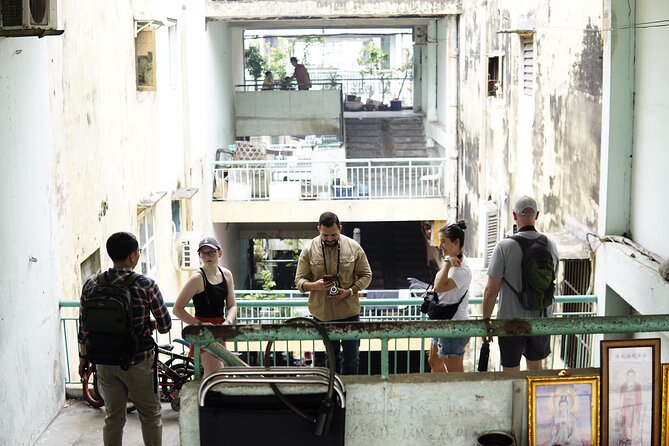
Another notable part of the route is a 1968 building in Ho Chi Minh City, described as one of the oldest apartments in town. The itinerary gives about one hour to explore the coffee shop and this building, though the full activity lasts longer once the walking and photography practice are included.
An old apartment building is a useful setting for black-and-white film. Its appeal is not necessarily one famous facade. It is the accumulated detail: stairways, aging surfaces, corridors, balconies, and the way people adapt older spaces for daily use.
The exact access points and photographic opportunities can vary, so you should follow Bui Hoang Tu’s guidance. The activity is not presented as an architectural lecture, and no detailed room-by-room tour is promised. Instead, the building works as a place to see another side of Saigon and practice looking closely.
This is also where the tour differs from a quick photo stop. You have the chance to consider how the building functions as a lived-in place, not only as an old structure. Be mindful of residents and avoid treating private areas as a studio.
Finishing at Chợ Bàn Cờ
The walk ends at Chợ Bàn Cờ in District 3. This local market is the final point for the experience, not the original meeting place.
The ending makes practical sense. You finish in a market setting after working through streets, alleys, and older buildings. If you still have energy, you can continue exploring the area on your own after the tour, but the organized activity ends there.
Because there is no private transportation included, you should plan how you will reach the starting point and how you will leave the market afterward. The experience is near public transportation, which helps, but the tour does not provide a transfer between the two points.
The start and end locations also mean you should wear comfortable shoes and keep your belongings manageable. The supplied information does not specify a vehicle or a dedicated ride, so plan for a walking-based city experience rather than a drive between attractions.
What the $148.27 price means
At $148.27 per person, this is not a budget sightseeing walk. The price needs to be judged against what you are actually receiving.
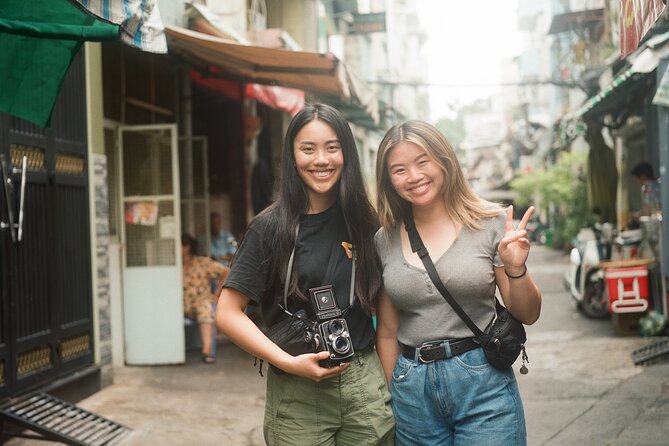
You are paying for a private activity, the guide’s time, a TLR camera, one roll of black-and-white medium-format film, coffee or tea, photography instruction, and translation help during local interactions. You are also paying for a particular kind of access: a slower route through everyday places rather than a checklist of major attractions.
The film and camera are central to the value. If you already own a medium-format camera and simply want a city walk, the price may feel high. If you are curious about analog photography but do not have access to this type of camera, the included equipment makes the experience more appealing.
You should also think about the final photographs. The provided information does not state how or when the film will be developed, scanned, or delivered. Ask about that before booking if receiving finished images is important to you. The tour clearly includes the camera and one roll of film, but no processing arrangement is specified.
For someone who wants a standard Ho Chi Minh City introduction, cheaper options are available. For someone who values private guiding, local translation, and a hands-on analog photography session, the price can make sense.
Who will enjoy this experience most
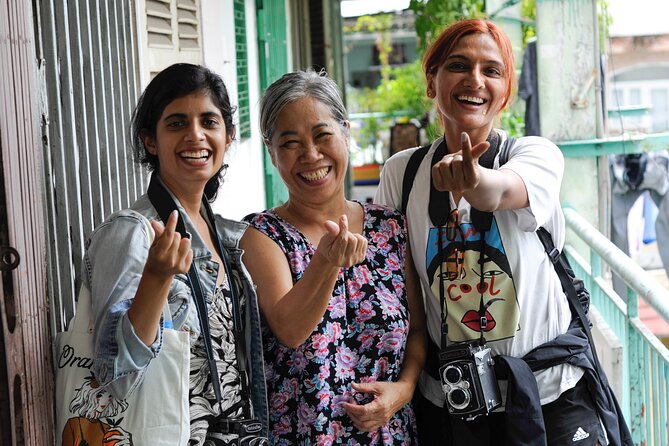
I would recommend this activity to a person who enjoys photography, old objects, and small details. You do not need to be an expert, but you should be willing to learn and accept that your results may be uneven.
It also suits repeat visitors who have already seen the major sights and want a more local route. The coffee shop, alley markets, old apartment building, and market ending offer a different way to understand the city than a tour focused on famous monuments.
The experience may also suit a solo visitor or a small private group. Since only your group participates, you can ask more questions and spend more time practicing with the camera.
I would be cautious about booking it if you want a fast, polished sightseeing program, a large number of finished images, or a vehicle included. It may also frustrate anyone who dislikes manual cameras or wants complete control over the final photographic result.
Practical details that affect your day
The activity lasts approximately three to four hours. That is a useful middle length: long enough to settle into the camera and local setting, but short enough to fit around other plans in Ho Chi Minh City.
Confirmation is provided when you book. The experience requires good weather, and a poor-weather cancellation can result in another date or a full refund. You can cancel for a full refund up to 24 hours before the start time. Cancellations or changes inside that window are not accepted for a refund.
Most people can participate, and the meeting area is near public transportation. The supplied information does not provide detailed accessibility notes, so contact the provider if you need specific arrangements.
The tour is led by Bui Hoang Tu. His role is more than camera instruction. He also helps you break the ice with local people and translate during interactions, which is especially useful when you are photographing everyday life rather than buildings alone.
Should you book this Saigon photo walk?
Book it if you want to slow down and see Ho Chi Minh City through a limited number of carefully chosen frames. The old TLR camera, one roll of black-and-white film, coffee at a 90-year-old shop, alley markets, and the 1968 apartment building give the outing a clear character.
Skip it if you want a conventional highlights tour, private transportation, or guaranteed finished photographs. Before booking, ask how the film will be processed if that detail matters to you.
For the right person, the best souvenir may not be a perfect photograph. It may be the habit of looking twice before pressing the shutter.
FAQ
Where does the experience start?
It starts at 73/8 Hồ Hảo Hớn, Phường Cô Giang, Quận 1, Ho Chi Minh City, Vietnam.
Where does the experience end?
It ends at Chợ Bàn Cờ in Phường 3, District 3, Ho Chi Minh City.
How long does the activity last?
The experience lasts approximately three to four hours.
What camera do I use?
You use an analog TLR, or twin-lens reflex, camera supplied by the experience provider.
Is film included?
Yes. One roll of black-and-white medium-format film is included.
Is coffee included?
Yes. Coffee or tea is included during the coffee shop stop.
Is private transportation included?
No. Private transportation is not included.
Is this a private experience?
Yes. Only your group participates in the activity.
What happens if the weather is poor?
The experience requires good weather. If it is canceled because of poor weather, you will be offered a different date or a full refund.
Newest Ho Chi Minh City write-ups
- VIP Tour Authentic Mekong Delta & Local pagoda by SpeedBoat★ 4.6 · 5 reviews
- Vung Tau Beach Full Day Trip From Ho Chi Minh City★ 4.4 · 13 reviews
- Water Puppet Show And Dinner Cruise On Saigon River Tour★ 4.0 · 6 reviews
- Off The Beaten Track The Mekong By Bike,boat & Kayak Day Trip★ 5.0 · 4 reviews
- Private Luxury Tour Mekong Delta 1 day★ 5.0 · 3 reviews
- VIP Tour Enjoy Romantic Sunset by Speed Boat Free Cocktail★ 4.8 · 13 reviews
- Mekong Delta 2 Days 1 Night Small Group Homestay★ 5.0 · 37 reviews
- Mekong Delta from Phu My Cruise Harbor★ 5.0 · 6 reviews