
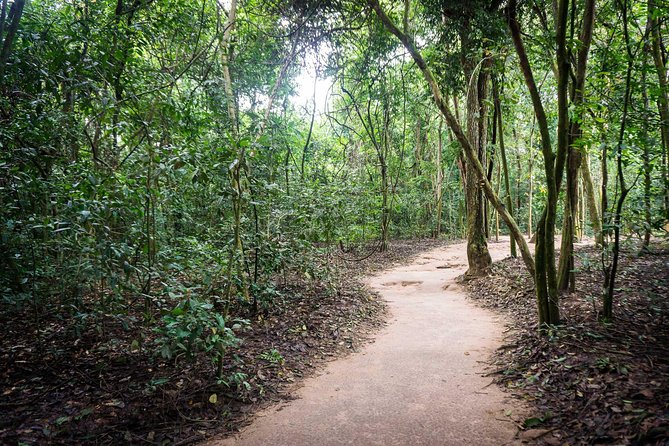
Reviewed · CU CHI TUNNELS TOURS FROM SAIGON
Afternoon Cu Chi Tunnels – Small Group Half-Day Tour
The most striking part of this afternoon tour is the chance to see Ben Dinh, one of the remaining sections of the Cu Chi tunnel network, a huge underground system built for survival during the Vietnam-American War. You will watch an introductory film, then walk through former living, medical, storage, and command areas before seeing concealed entrances and wartime traps.
I like the small maximum group of 12, which gives the guide more room to explain what you are seeing. I also like the straightforward $25 price, since it covers the air-conditioned ride, entrance fee, English-speaking guide, and bottled water. The main drawback is the long road journey from central Ho Chi Minh City, plus a possible handicraft workshop stop that may feel less useful than extra time at the tunnels.
Key points at a glance
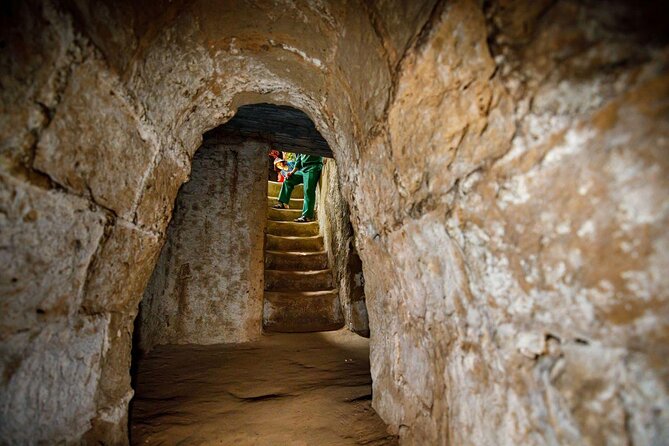
- Ben Dinh is the main focus: You will explore a surviving section of the famous Cu Chi tunnel network.
- The afternoon departure is practical: The tour leaves at 1:00 PM and lasts about six and a half hours.
- Groups stay small: The operator accepts between two and 12 people, not a large coach party.
- The $25 price covers the basics: Transport, guide, entrance fee, bottled water, and District 1 pickup if you select that option.
- Expect a history-led visit: An introductory film and guide explanation come before you enter the tunnel area.
- Allow for traffic: The return time can shift because of Ho Chi Minh City road conditions.
Why the Cu Chi Tunnels matter
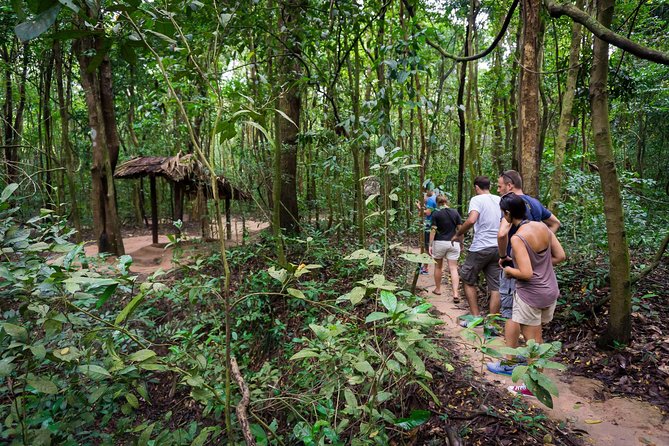
Cu Chi lies northwest of Ho Chi Minh City, roughly 60 to 70 kilometers away depending on the route and starting point. The district became known during the war as an area of steel because its tunnel network helped people live, move, organize, and fight underground.
The full network extended for about 220 kilometers. You will not see all of that, of course. The visit centers on the Ben Dinh section, where surviving tunnel areas and reconstructed features help explain how the underground system worked.
This is not just a quick look at a narrow passage. The tunnel system included kitchens, sleeping areas, storage rooms, weapons workshops, field hospitals, and command centers. That layout matters. It shows that the tunnels were planned as an underground village, not simply a hiding place.
I find that context useful before seeing the site. Without it, the small entrances and low passageways can seem like isolated curiosities. With it, you begin to understand how many ordinary needs had to be handled below ground, often in cramped and difficult conditions.
More ways to do the Cu Chi tunnels:
- Cu Chi Tunnels Tour from HCM City – Morning or Afternoon
★ 5.0 · 15,833 reviews - HCM: Cu Chi Tunnels-Tapioca Small Group Tour Morning or Afternoon
★ 5.0 · 7,485 reviews - Cu Chi Tunnels and Mekong Delta Signature Tour
★ 5.0 · 7,328 reviews
The 1:00 PM departure from Ho Chi Minh City
The tour begins in the afternoon at 1:00 PM. The listed meeting point is 112 Đ. Trần Hưng Đạo in Phường Phạm Ngũ Lão, District 1. Pickup and drop-off at centrally located District 1 hotels are available if you choose that option.
The ride is in an air-conditioned vehicle, and bottled water is included. That matters in southern Vietnam, especially when you are combining a long road journey with an outdoor historical site. If you are staying outside District 1, an extra pickup charge may apply.
Some central District 1 hotels may be affected by traffic rules that prevent the vehicle from stopping directly outside. If that applies to your hotel, contact the local provider for instructions rather than assuming the driver can pull up at the door.
The drive takes up much of the six-and-a-half-hour schedule. I would treat the transport time as part of the experience rather than expect a quick hop to the site. Your return can be later than planned if traffic is heavy, and the operator does not control those delays.
Preparing for Ben Dinh Tunnels
On arrival, you begin with a short introduction and a film about the construction of the tunnels and the harsh conditions faced by the people who used them. This opening gives you a basic map of the site before you start walking around.
The film is a useful part of the visit because the tunnel system can otherwise be hard to picture. You will hear how underground spaces were used for daily life and military work, then see examples of the structures described by the guide.
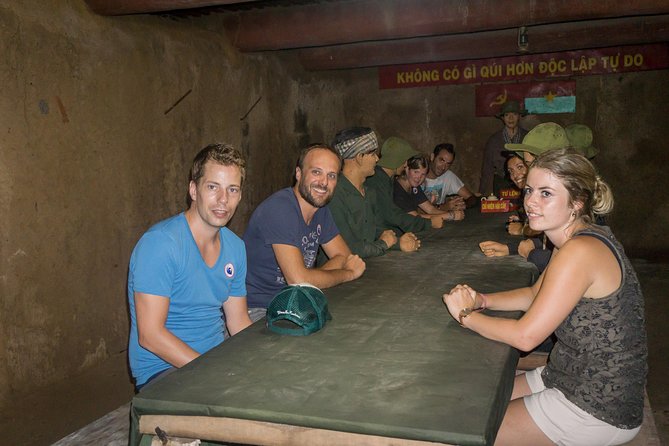
The Ben Dinh area includes living spaces, kitchens, bedrooms, storage areas, weapons facilities, field hospitals, and command centers. The point is not comfort. These spaces were designed to meet basic needs while keeping people protected and difficult to detect.
You should expect an educational visit rather than a polished museum presentation. The guide connects the separate features and explains how they fitted together. Since the group is limited to 12 people, you should have a better chance of hearing the explanation than you would in a large tour group.
Walking among trap doors and tunnel defenses
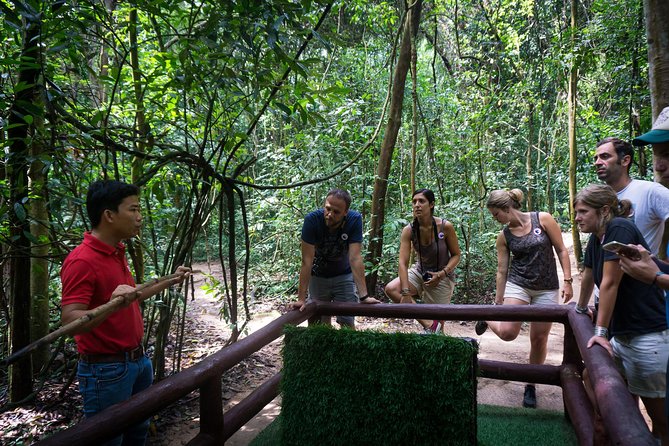
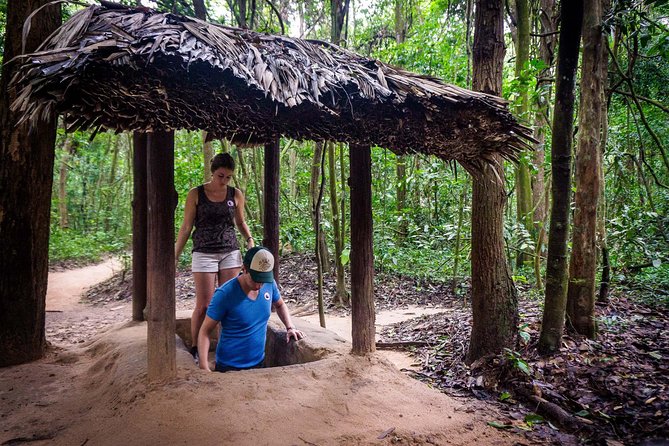
One of the most memorable parts of the visit is seeing hidden trap doors and defensive traps placed around the tunnel network. These features show how carefully the area was protected and how hard it would have been for an unfamiliar person to move through it safely.
Pay attention to the ground and to the guide’s instructions. The site contains uneven outdoor areas and wartime structures, so this is not an ideal outing for anyone with serious mobility limits. The operator says the activity is not available for people with disabilities or heart problems.
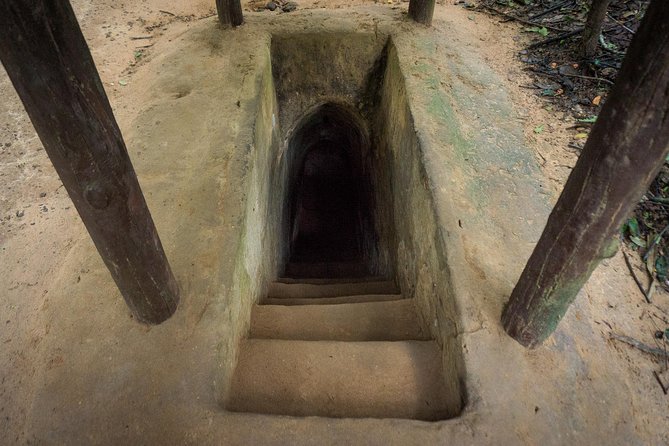
The tunnel visit also requires a willingness to enter confined spaces if that part of the experience is available during your visit. The supplied information does not give exact tunnel dimensions or state how long you spend underground, so you should not book expecting a long subterranean walk. The focus is the wider tunnel area and its surviving features.
The contrast between the hidden entrances and the larger support spaces is important. A concealed opening gives you one small piece of the story. The kitchens, hospitals, and command rooms show the scale of the organization behind it.
A few more Ho Chi Minh City half-days and evenings to weigh up
- Cu Chi Tunnels Half-Day Tour: Vietnam War Underground Network
★ 5.0 · 2,587 reviews - Cu Chi Tunnels Half-Day Tour: Big Group Vietnam War Experience
★ 5.0 · 2,386 reviews - Small-Group Cu Chi Tunnel Half-day Tour: Morning or Afternoon
★ 5.0 · 1,521 reviews - Ho Chi Minh City Private Half-Day Tour by U.S Army Jeep
★ 5.0 · 1,164 reviews
What the three-hour site visit includes
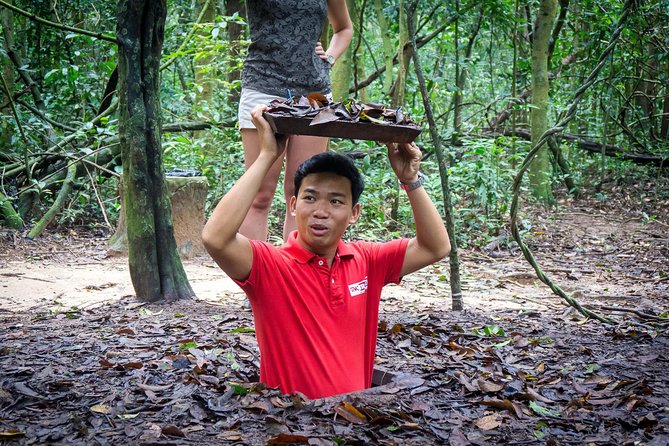
The Ben Dinh stop is listed at about three hours, including the introduction and exploration. That is enough time to hear the background, view the tunnel structures, and examine the main features without turning the entire day into a rushed photo stop.
You will see how basic rooms were arranged beside military facilities. Kitchens and bedrooms existed close to storage, weapons production, hospitals, and command posts. The arrangement tells you how closely everyday life and wartime operations were tied together.
The guide’s role is especially important here. The site contains many details that are easy to miss if you walk through without explanation. A hidden entrance may look like an ordinary patch of ground, while a small chamber may have served a very specific purpose.
The introductory film and the live explanation work together. The film provides a general picture, while the guide can point to the actual structures in front of you. If you enjoy history, listen for the connection between the tunnel design and the need to protect people, supplies, medical care, and communication.
The possible handicraft workshop stop
The tour may include a stop at a handicraft shop connected with people with disabilities. This can add another side to the visit, but it may not be the strongest part of the afternoon for every person.
The main criticism is practical: the people creating the artwork may be working outside in intense heat rather than inside the air-conditioned room. That can make the stop feel uncomfortable and less meaningful, particularly after time spent walking around the tunnel site.
You can treat it as an optional shopping pause rather than the reason to book the tour. If you prefer to keep the focus on the Cu Chi history, ask the guide how much time the stop will take. The available information does not state the exact length, so the amount of time may vary.
Is $25 a fair price?
At $25 per person, this is a good-value way to reach Cu Chi if you want transport, a guide, and admission handled together. The price includes the air-conditioned vehicle, English-speaking guide, entrance fee, and bottled water. District 1 hotel pickup and drop-off are included when that option is selected.
The value is strongest for people who do not want to arrange a separate car or negotiate transport to a site far outside the city. You also avoid paying an entrance fee separately and have a guide to explain the tunnel system.
The price does not include travel insurance, tips, tax, personal spending, snacks, or other items not listed. Bring money if you want refreshments or plan to buy something at the handicraft stop.
The small group also helps justify the price. With a maximum of 12 people, this is not the cheapest possible way to visit Cu Chi, but it offers a more personal format than a big coach trip. The minimum group size is two people, so the tour requires enough bookings to run.
Who will enjoy this afternoon tour?
I would recommend it to you if you want a clear introduction to one of Vietnam’s most important wartime sites without giving up a full day in Ho Chi Minh City. The afternoon timing leaves your morning open, while the six-and-a-half-hour schedule still gives you a proper visit.
It suits people who value explanation over independent wandering. The film, guide, and organized route make it easier to understand what you are seeing, especially if you know little about the Cu Chi system before arriving.
It is also a sensible choice for solo visitors, couples, and small groups who prefer a group no larger than 12. Children can join, but they must be accompanied by an adult. The child rate applies only when sharing with two paying adults, and a surcharge may apply when two or more children are booked.
I would think twice if you have heart problems, serious mobility limitations, or little patience for a long road journey. The operator does not consider the tour suitable for people with disabilities or heart problems, and traffic can affect the return time.
Practical tips for a smoother visit
Wear comfortable clothing and shoes suitable for walking around an outdoor historical site. The supplied information does not list a dress code, but you should plan for heat and bring water beyond the included bottle if you need more during the afternoon.
Keep your schedule flexible after the tour. The operator specifically notes that return time depends on traffic, and Ho Chi Minh City roads can make a planned arrival time uncertain.
If your hotel is in District 1, confirm the pickup arrangement. Some centrally located hotels are affected by traffic restrictions, so you may be asked to meet the vehicle at a nearby point.
Book at least a little ahead if your dates are fixed. This experience is booked around 18 days in advance on average, and the small group format can fill sooner than a large bus tour.
Cancellation is free up to 24 hours before the start time. Changes or cancellations made less than 24 hours before departure are not refunded. Poor weather or failure to reach the minimum number of participants can also lead to a rescheduled tour or full refund.
Cu Chi Tunnels compared with a city-only afternoon
Ho Chi Minh City has plenty to occupy an afternoon, so this tour is best seen as a choice to leave the city and spend several hours with wartime history. The reward is direct access to the tunnel area and a clearer sense of how the underground system functioned.
The trade-off is time on the road. You are giving up part of your day for a site outside the center, and the return journey may run late. For someone with only a short stay, that time commitment deserves attention.
The organized format helps balance the distance. You do not need to arrange a private vehicle, find the entrance, or work out how the different tunnel features relate to one another. You can focus on listening and looking.
Should you book this tour?
Book it if you want a reasonably priced, small-group visit to Ben Dinh with transport and admission included. The afternoon departure works well when your morning is already occupied, and the guide-led format gives the tunnel system much-needed context.
Skip it if you dislike long transfers, cannot manage outdoor walking, or need a precise return time. The handicraft stop may also feel unnecessary, and traffic can stretch the day.
For most people interested in Vietnam’s wartime past, this is a practical choice. The strongest parts are the small group, clear historical structure, and all-in-one price. Just go in expecting a road journey, a warm outdoor site, and a return time that depends on Ho Chi Minh City traffic.
FAQ
How long does the Cu Chi Tunnels tour last?
The tour lasts approximately six hours and 30 minutes, including transport between Ho Chi Minh City and the tunnel site.
What time does the tour depart?
The afternoon tour departs at 1:00 PM.
Where does the tour start?
The listed meeting point is 112 Đ. Trần Hưng Đạo, Phường Phạm Ngũ Lão, District 1, Ho Chi Minh City.
Is hotel pickup available?
Pickup and drop-off are available at centrally located hotels in District 1 if you select that option. An extra surcharge may apply for pickup outside District 1.
What is the maximum group size?
The tour accepts a maximum of 12 people. The small group size is listed as between two and 12 participants.
Is the entrance fee included?
Yes. The entrance fee to the Cu Chi Tunnels is included in the tour price.
Is the tour conducted in English?
Yes. An English-speaking tour guide is included.
Are children allowed to join?
Yes, but children must be accompanied by an adult. The child rate applies only when the child shares with two paying adults, and a surcharge may apply for bookings with two or more children.
Can I cancel for a refund?
You can cancel at least 24 hours before the start time for a full refund. Cancellations or changes made less than 24 hours before the start time are not accepted for a refund.
Newest Ho Chi Minh City write-ups
- Vung Tau Beach Full Day Trip From Ho Chi Minh City★ 4.4 · 13 reviews
- Water Puppet Show And Dinner Cruise On Saigon River Tour★ 4.0 · 6 reviews
- VIP Tour Authentic Mekong Delta & Local pagoda by SpeedBoat★ 4.6 · 5 reviews
- Off The Beaten Track The Mekong By Bike,boat & Kayak Day Trip★ 5.0 · 4 reviews
- Private Luxury Tour Mekong Delta 1 day★ 5.0 · 3 reviews
- VIP Tour Enjoy Romantic Sunset by Speed Boat Free Cocktail★ 4.8 · 13 reviews
- Mekong Delta 2 Days 1 Night Small Group Homestay★ 5.0 · 37 reviews
- Mekong Delta from Phu My Cruise Harbor★ 5.0 · 6 reviews
Cu Chi Tunnels Tours from Saigon, compared.

Cu Chi Tunnels Tour from HCM City – Morning or Afternoon
Read our review →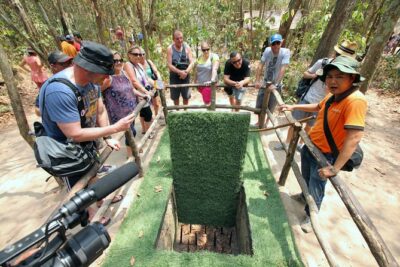
Cu Chi Tunnels-Tapioca Small Group Tour Morning or Afternoon
Read our review →
Cu Chi Tunnels and Mekong Delta Signature Tour
Read our review →
Cu Chi Tunnels and Mekong Delta Full Day Tour – Max 12
Read our review →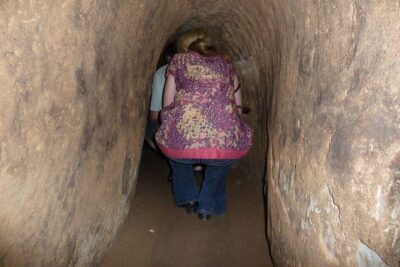
Cu Chi Luxury Group Tour – Tapioca and Cake Half Day
Read our review →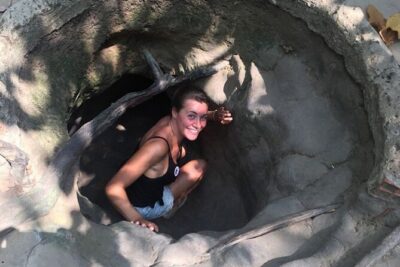
Adventure Cu Chi Tunnels and Mekong Delta Tour From HCM
Read our review →
Cu Chi Tunnels and Mekong Delta – Small Group Tour
Read our review →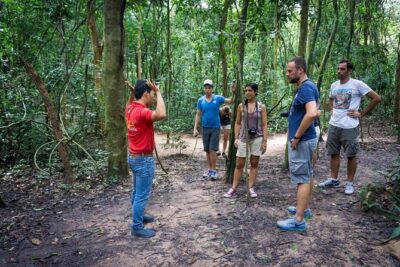
Cu Chi Tunnels Half-Day Tour: Vietnam War Underground Network
Read our review →Browse the lists this tour appears in