
Reviewed · HO CHI MINH CITY
Three Coolest Neighborhoods in Saigon
Saigon’s most revealing sights are often not the grand ones. This four-hour walk leads you from District 1 into District 4’s narrow alleys, Chinatown, and a wartime safehouse, showing how ordinary neighborhoods shape the city. You’ll taste market fruit, Vietnamese coffee, and herbal tea along the way.
I like the route’s variety: local life and serious history share the same morning. I also like the small group limit of eight, which gives guides such as Kyle and Danny room to explain details, answer questions, and use visual material during the walk. The catch is the distance. At 5.5 to 6 kilometers, this is not a gentle sightseeing stroll, and the humid morning can make comfortable shoes essential.
Key points at a glance
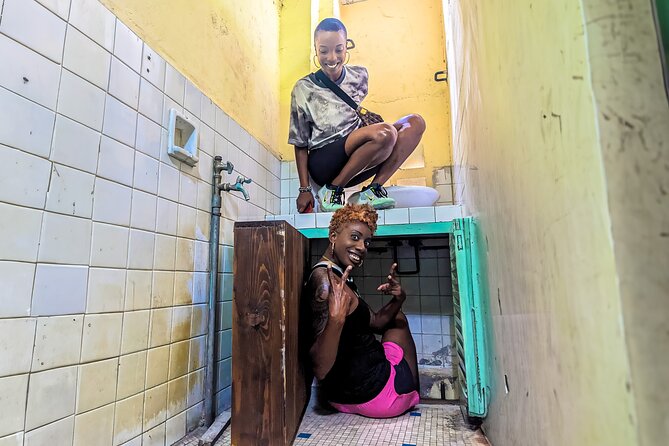
- District 4 alleyways: Walk through the maze near Xom Chieu Market and see where many local residents live.
- Three drinks and tastes: Sample fresh seasonal fruit, Vietnamese coffee, and herbal tea without paying extra for these inclusions.
- Chinatown in District 5: Visit Aquarium Street, Herbal Medicine Street, and a colorful Chinese-style Buddhist temple.
- Vietnam War context: Stop at the Venerable Thich Quang Duc Monument and visit the Commando Safehouse.
- Small group format: The maximum is eight people, with English-speaking guides including Kyle and Danny.
- Useful ending point: Finish on Vo Van Tan Street in District 3, about a five-minute walk from the city center.
Why this route shows you a different Saigon
Many first visits to Ho Chi Minh City stay close to District 1. That area is handy, full of hotels, and packed with famous stops, but it only gives you one slice of Saigon. This walk deliberately moves beyond the familiar center.
The route crosses three districts and uses ordinary streets as its main attraction. You are not simply checking off monuments. You are seeing markets, cramped lanes, small businesses, religious sites, and places connected to the city’s wartime past.
That approach makes the experience useful early in your stay. After four hours, you should have a clearer sense of how Saigon fits together, how Chinese culture shaped Cholon, and how local neighborhoods differ from the polished central streets.
The group size matters here. With no more than eight people, the guide can keep the pace together and stop to explain what you are seeing. Kyle and Danny are two named guides associated with this experience, and the format allows for the friendly, conversational style that several guests specifically appreciated. One review described Kyle as feeling like an old friend, while another praised the folder of visual material he brought along. That kind of preparation is especially helpful when discussing war history, since photographs and diagrams can give meaning to places that otherwise look like ordinary city streets.
Other Ho Chi Minh City trips people line up in the same week:
- Cu Chi Tunnels Tour from HCM City – Morning or Afternoon
★ 5.0 · 15,833 reviews - From HCM City: Mekong Delta Tour with Sampan Journey
★ 4.5 · 13,132 reviews - Ho Chi Minh City Street Food Tour & Sightseeing By Motorbike
★ 5.0 · 9,413 reviews
Starting at Xom Chieu Market in District 4
The meeting point is at 36 Ho Tung Mau in Ben Nghe, District 1. The tour begins at 8:30 a.m., then heads toward Xom Chieu Market for the first major section.
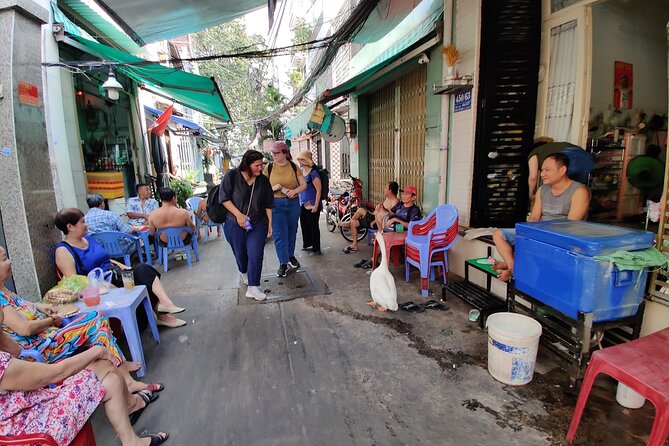
The market stop itself is free, but the real point is the route around it. You walk about 3 kilometers through District 4, entering the tiny alleys that are easy to miss from a taxi or bus. These lanes offer a closer look at residential Saigon, where daily life takes place close to the pavement and homes are packed into a tight urban grid.
This is the part of the tour that best answers the question of what makes the city different. You may see small food stalls, household activity, market trade, and narrow passageways where scooters and pedestrians share very little space. The guide’s role is to connect those details to the way locals live, rather than merely point at them.
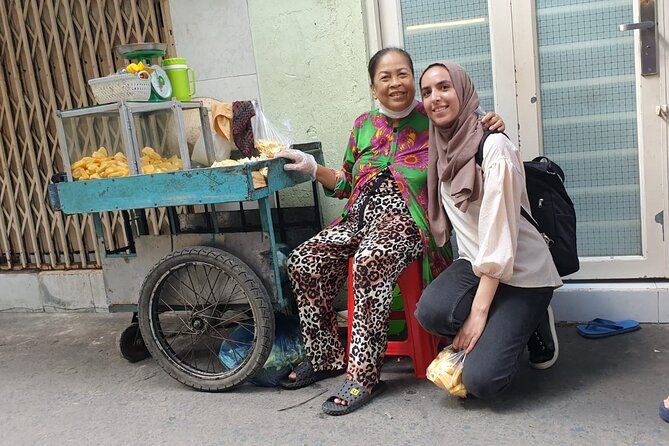
Fresh seasonal fruit is bought at the market and included as a snack. That is a small but worthwhile touch. You taste something tied to the place you are visiting instead of receiving a generic packaged snack.
The first section lasts about 90 minutes. It is also the longest walk, so take it seriously. The tour covers roughly 5.5 to 6 kilometers in total, and the first 3 kilometers come before you reach Chinatown. Wear shoes you can walk in for several hours. Sandals may be comfortable for some people, but the route’s narrow lanes and uneven surfaces make firm footwear the safer choice.
Exploring Cholon, Aquarium Street, and Herbal Medicine Street
The second stop is Pho Tau Sai Gon in Cholon, the well-known Chinatown area of District 5. From District 4, the walk through this section covers about 1.5 kilometers and lasts around an hour.
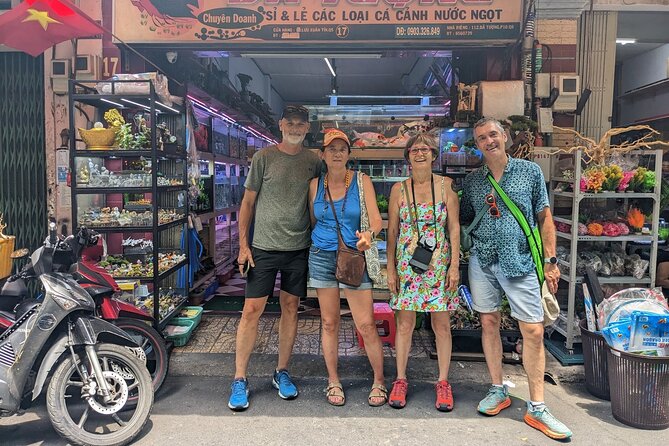
The route includes Aquarium Street, Herbal Medicine Street, and a Chinese-style Buddhist temple. These places give you a different side of Saigon from the market alleys. Here, the focus shifts toward Chinese-Vietnamese culture, traditional trade, religious practice, and streets organized around particular types of goods.
Aquarium Street is an unusual stop. The name points to the concentration of aquarium-related shops, giving the area a specialized identity you would not find on a standard city-center walk. Herbal Medicine Street offers another focused slice of local commerce, with shops connected to traditional remedies and ingredients.
You also taste herbal tea during this part of the morning. It is included in the price, along with coffee and seasonal fruit. The tea gives the guide a natural opening to explain local habits and the role of herbal medicine in Vietnamese culture.
The Chinese-style Buddhist temple adds color and a change of pace. You can expect a more decorative setting than the residential alleys, with Chinese design influences that help explain why Cholon feels distinct from other parts of Ho Chi Minh City. The temple is not presented as a stand-alone sightseeing stop. It fits into the larger story of a city shaped by several cultural traditions.
This section is a good reason to choose the tour over a generic food walk. Food tours can be delicious, but this route also explains why certain streets exist and how communities have maintained their identity within a fast-growing city.
Coffee, fruit, and tea that serve a purpose
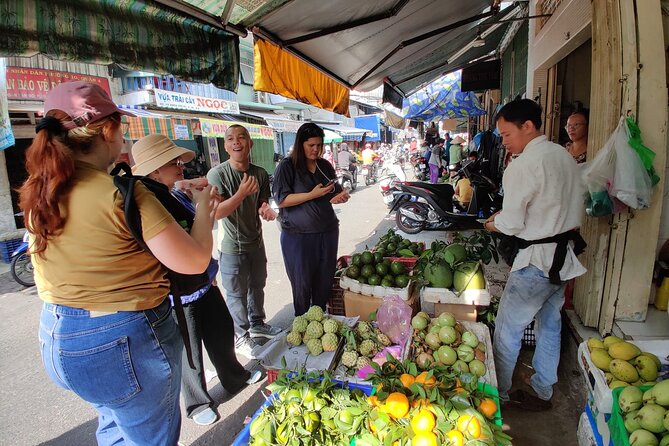
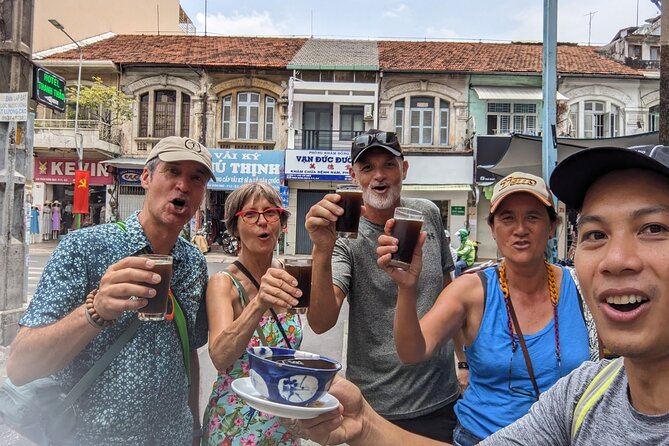
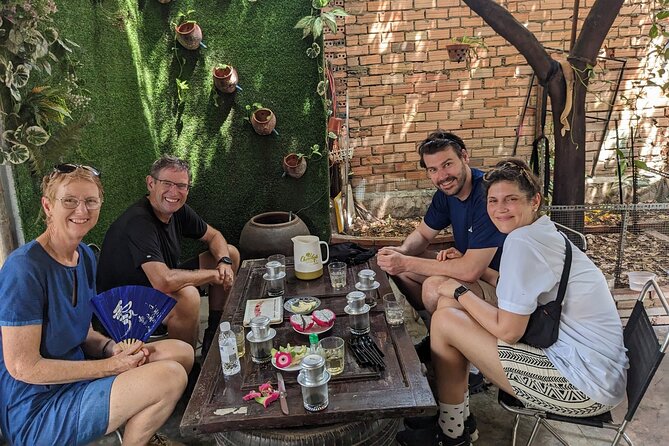
The included tastes are modest, but they make the walk more engaging. You receive fresh seasonal fruit from Xom Chieu Market, Vietnamese coffee, and herbal tea.
The coffee is not just a refreshment placed between stops. Vietnamese coffee is part of everyday city life, and drinking a cup during a neighborhood walk gives you a pause to ask questions and observe the streets around you. The precise coffee shop is not specified, so the experience should not be booked as a dedicated café tour.
The same is true of the herbal tea. It helps connect the Chinatown portion to the nearby medicine shops, but it is not a full tasting menu. Think of these inclusions as useful local samples rather than a major food experience.
All fees and taxes are included. Personal purchases are not, so bring some money if you want to buy extra drinks, fruit, medicine-related goods, or souvenirs along the way. Tips are optional, though appreciated.
A completely different sort of day out of Ho Chi Minh City:
- HCM: Cu Chi Tunnels-Tapioca Small Group Tour Morning or Afternoon
★ 5.0 · 7,485 reviews - Cu Chi Tunnels and Mekong Delta Signature Tour
★ 5.0 · 7,328 reviews - Mekong Delta Guided Tour from Ho Chi Minh City
★ 4.5 · 7,192 reviews - Cu Chi Tunnels & Mekong Delta Tour with VIP Limousine Transfer
★ 5.0 · 7,052 reviews
The Burning Monk site and a wartime safehouse
The final section covers about 1 kilometer and lasts roughly an hour. It brings you to the Venerable Thich Quang Duc Monument, the site connected to the Buddhist monk who burned himself in 1963 in protest during the Vietnam War era.
This stop adds weight to the walk. After markets, alleys, coffee, and temples, you reach a place tied to one of the most remembered acts of political protest in modern Vietnamese history. The guide explains the site and its place in the war, helping you understand why the monument matters.
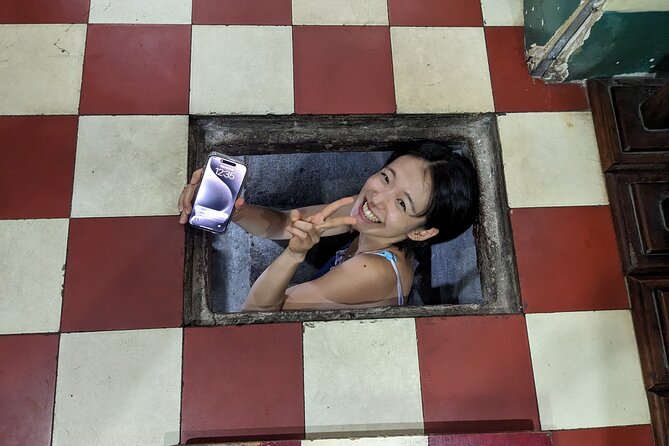
The tour then continues to the Commando Safehouse, where you go down to a secret weapons cellar. This is one of the most distinctive parts of the experience. A cellar hidden beneath an ordinary city building gives you a physical sense of how wartime operations could exist inside a dense urban neighborhood.
The safehouse visit is included, and it gives the final hour a clear focus. You are not only hearing about war history from a museum label. You are entering a location connected to the storage of weapons and clandestine activity.
Expect the subject matter to be serious. This is not a light sightseeing stop, and some people may prefer a tour focused only on food or architecture. If you want context about Vietnam’s past and how it affected city life, this section adds real value.
What the $37.59 price gets you
At $37.59 per person, this is not the cheapest way to walk around Ho Chi Minh City. You can explore markets and Chinatown independently for less, especially if you are comfortable navigating without a guide.
The value comes from the connections. The price includes an English-speaking guide, market fruit, Vietnamese coffee, herbal tea, the included safehouse admission, and all fees and taxes. You are also paying for a planned route that links three districts and several subjects that would be difficult to organize smoothly on your own.
A private guide would cost more, while a large group tour might offer less time for questions. The eight-person maximum puts this experience in a useful middle ground. It is still a group walk, but small enough for the guide to keep the conversation personal.
Group discounts are available, which may improve the price for people booking together. Pickup and drop-off are not included, so you need to reach the starting point on your own and arrange your return from District 3.
For me, the price makes the most sense if you value interpretation. If you only want to see markets and take photographs, self-guided exploring may be better. If you want someone to explain the districts, connect the cultural details, and put the wartime sites into context, the fee is easier to justify.
Pace, group size, and practical comfort
The tour starts at 8:30 a.m., a sensible time for a long walk. It gives you a chance to cover ground before the day becomes hotter, though you should still prepare for heat and humidity.
The maximum group size is eight. That is small enough to hear the guide in narrow lanes and ask questions without interrupting the flow. It also means the experience can feel more like a guided walk with a local contact than a procession behind a flag.
Most people can participate, according to the supplied activity details. Still, the distance is the main physical consideration. There is no stated vehicle transfer between the major sections, so assume you will be on foot for the full route.
Public transportation is nearby, but pickup is not offered. The tour begins at 36 Ho Tung Mau in District 1 and ends on Vo Van Tan Street in District 3. The finish is convenient, about a five-minute walk from the city center, so you are not left far from central hotels and attractions.
Use the mobile ticket if that is how you book. Confirmation is sent at booking, which makes the morning meeting arrangement simple. Since the tour is offered at a scheduled start time, arrive ready to walk rather than expecting a flexible hop-on format.
Who will enjoy this Saigon walk most
This experience suits you if you want to get beyond the central tourist streets quickly. It is a particularly good choice for a first or second day in Ho Chi Minh City, when you still need a sense of place and want a guide to explain what you are seeing.
It also works well for people who enjoy history but do not want to spend an entire morning inside a museum. The Burning Monk site and Commando Safehouse provide serious historical content, while the market and Chinatown sections keep the route grounded in daily life.
Food-focused visitors will enjoy the coffee, fruit, and herbal tea, but should not confuse this with a dedicated culinary tour. The tasting element is limited and supports the cultural story rather than leading it.
This may not suit you if you dislike walking, need frequent vehicle transfers, or want a slow tour with long periods at each attraction. The route covers a lot of ground in four hours. You will see several areas, but the time at individual sites is necessarily brief.
It is also worth considering the tone. The morning moves from casual market life to political protest and wartime secrecy. That contrast is one of the tour’s strengths, but it may not fit someone looking for a purely easygoing introduction to the city.
Should you book the Three Coolest Neighborhoods in Saigon?
Book it if you want local streets, cultural context, and wartime history in one compact morning. The route is more distinctive than a standard District 1 walk, and the small group makes the long distance easier to manage.
The strongest reasons to go are the District 4 alleys, the specialized streets of Cholon, the included tastings, and the Commando Safehouse. Kyle and Danny are useful names to know when booking, since their friendly, prepared guiding style is part of what makes the experience work.
Skip it if 5.5 to 6 kilometers sounds tiring, or if you want a tour built around a large number of food samples. For everyone else, the $37.59 fee is fair for a well-planned route that shows you how different parts of Saigon connect. Free cancellation is available up to 24 hours before the start time, which gives you some flexibility when arranging your schedule.
FAQ
How long does the Three Coolest Neighborhoods in Saigon tour last?
The tour lasts approximately four hours, beginning at 8:30 a.m.
How far do you walk during the tour?
The total walking distance is about 5.5 to 6 kilometers. The route includes approximately 3 kilometers around District 4, 1.5 kilometers in Chinatown, and 1 kilometer during the final historical section.
Where does the tour start?
The meeting point is 36 Ho Tung Mau, Ben Nghe, District 1, Ho Chi Minh City, Vietnam.
Where does the tour end?
The tour ends on Vo Van Tan Street in District 3, about a five-minute walk from the city center.
What neighborhoods and districts does the tour visit?
The route visits District 4 around Xom Chieu Market, Chinatown in District 5, and District 3 near the Venerable Thich Quang Duc Monument and Commando Safehouse.
Are food and drinks included?
Yes. The experience includes seasonal fruit bought at the market, Vietnamese coffee, and herbal tea.
Is admission included?
All fees and taxes are included. Admission to the Commando Safehouse section is included as well.
How large is the group?
The maximum group size is eight people.
Can I cancel for a full refund?
Yes. You can cancel for a full refund up to 24 hours before the experience start time. Changes or cancellations made less than 24 hours before the start time are not accepted for a refund.
Newest Ho Chi Minh City write-ups
- VIP Tour Authentic Mekong Delta & Local pagoda by SpeedBoat★ 4.6 · 5 reviews
- Vung Tau Beach Full Day Trip From Ho Chi Minh City★ 4.4 · 13 reviews
- Water Puppet Show And Dinner Cruise On Saigon River Tour★ 4.0 · 6 reviews
- Private Luxury Tour Mekong Delta 1 day★ 5.0 · 3 reviews
- VIP Tour Enjoy Romantic Sunset by Speed Boat Free Cocktail★ 4.8 · 13 reviews
- Off The Beaten Track The Mekong By Bike,boat & Kayak Day Trip★ 5.0 · 4 reviews
- Mekong Delta 2 Days 1 Night Small Group Homestay★ 5.0 · 37 reviews
- Mekong Delta from Phu My Cruise Harbor★ 5.0 · 6 reviews